A Layer of Salt for My Oblivion
2023 – Ongoing
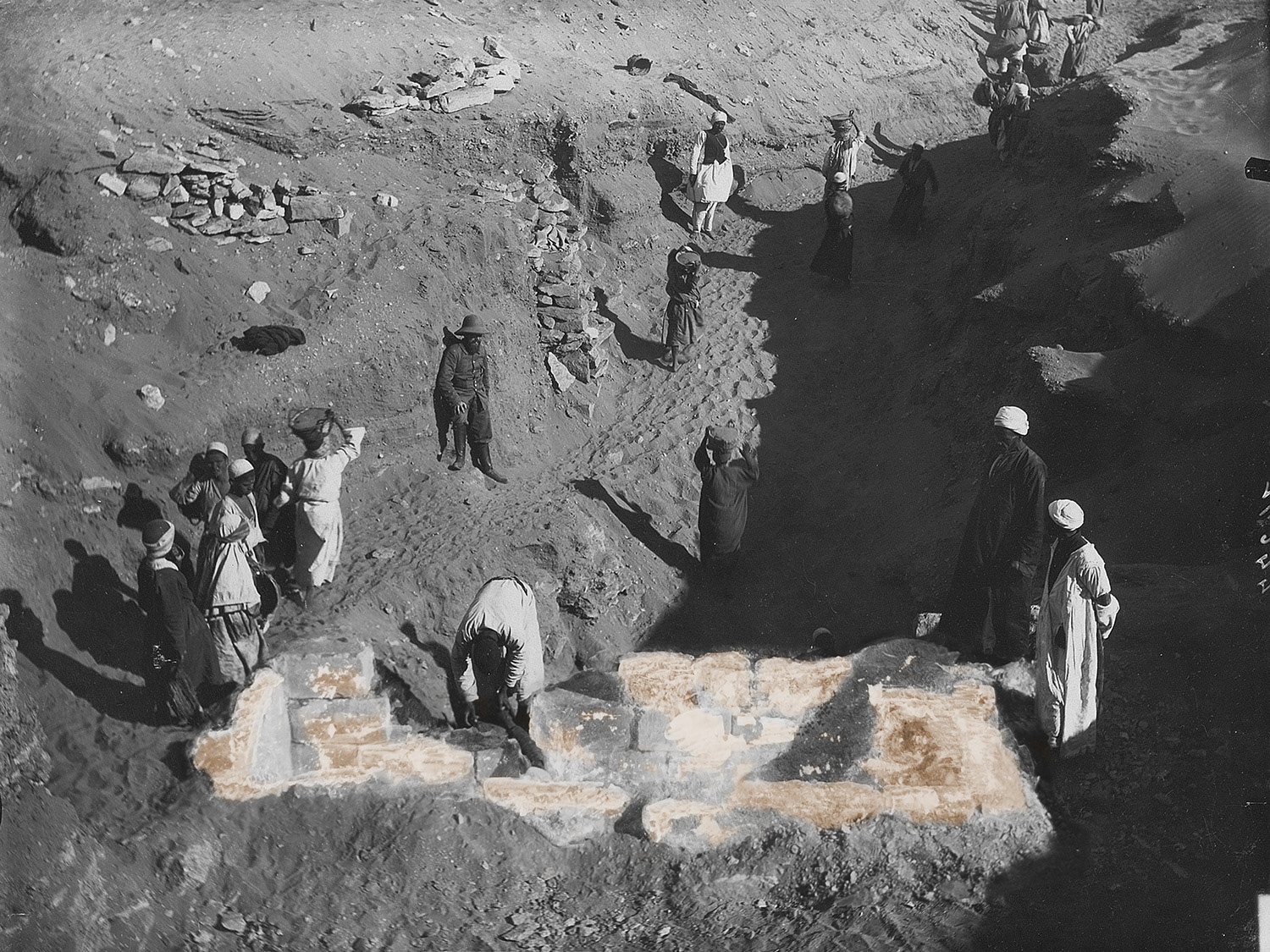
IntroductionIt was in 1905 that Belgian Egyptologist Jean Capart found a mastaba tomb in Saqqara, which he deemed worthy of being relocated to the Royal Museums of Art and History of Brussels, where he worked then as assistant curator. He had seen and rejected at least four tombs before finding this one built as an eternal resting place for an ancient Egyptian man named Neferirtenef and his wife. In those years, other museums had already acquired monumental ancient temples and tombs in their collections, and Capart aspired to bring an ancient wonder to Belgium. During the excavation, only the stones, which had beautifully coloured reliefs on them, were taken. The plain stones and the undecorated coffin with its unnamed occupant found in the tomb were left behind.
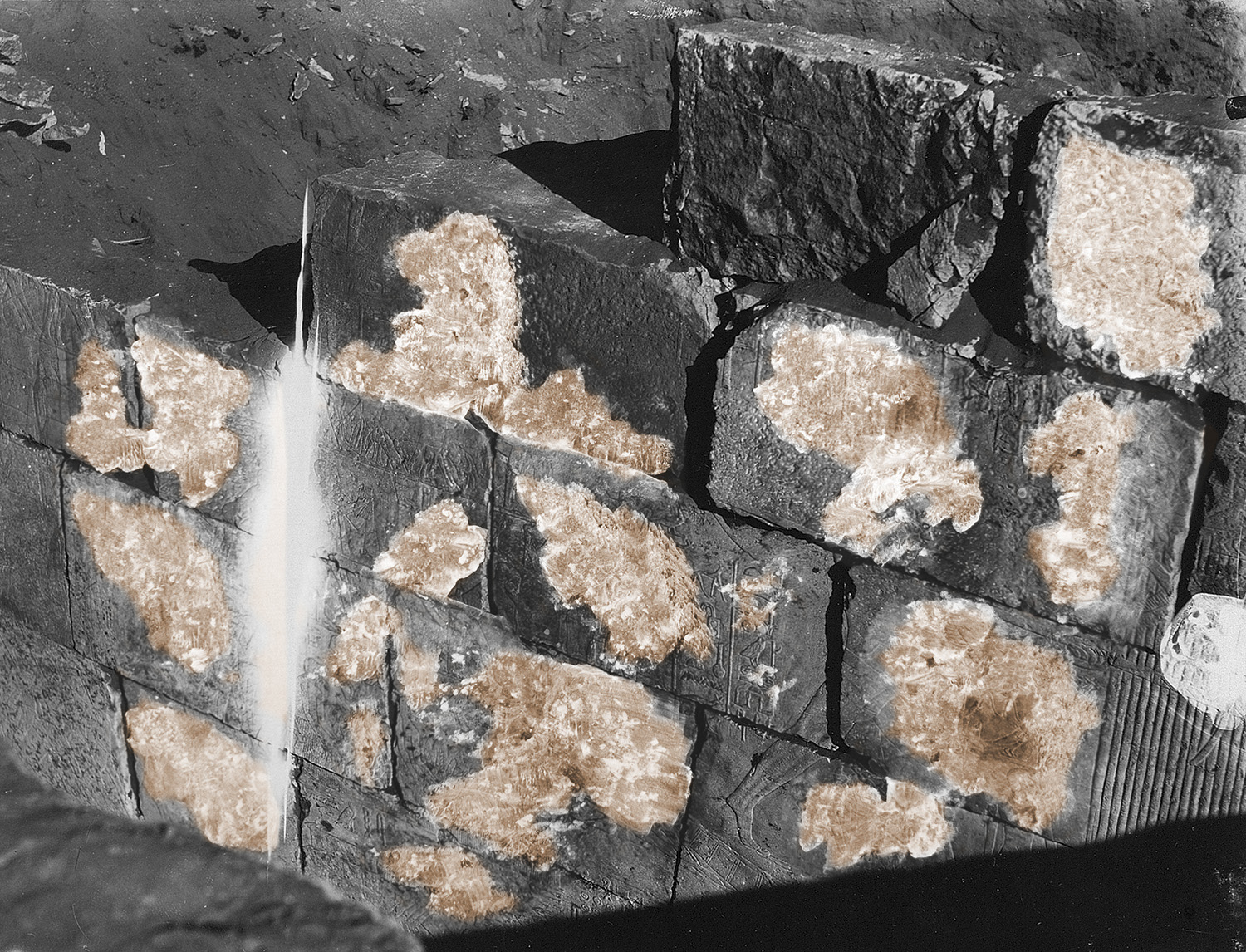
In A Layer of Salt For My Oblivion, I visualise how these displaced stones have rejected their displacement ever since arriving in Brussels. By absorbing the humidity of the European air, they form a layer of salt on their surfaces, erasing, in turn, what deemed them aesthetically worthy in the eyes of the archaeologist. To acknowledge their agency, I mimic their process by deforming the archival photographs taken during their excavation using salt and stone dust. In doing so, I seek to make their ongoing defiance against restaurateurs and conservators visible.
The first iteration of this work was exhibited at the Royal Museums of Art and History in Brussels in 2023 during the exhibition Expedition Egypt.